
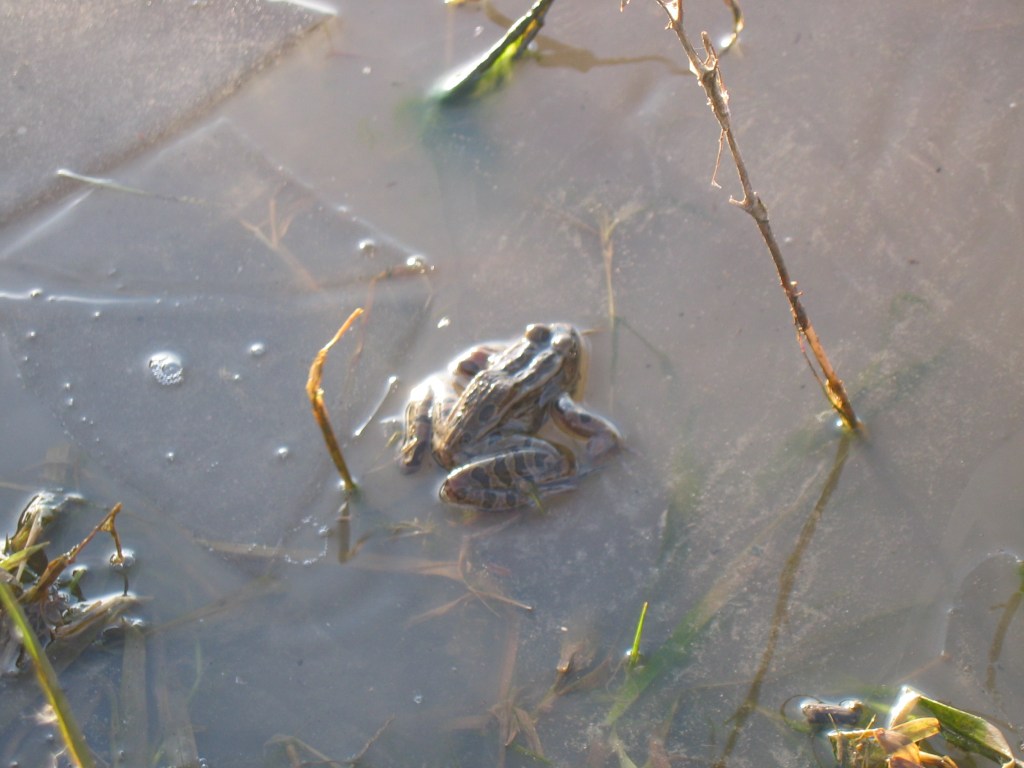
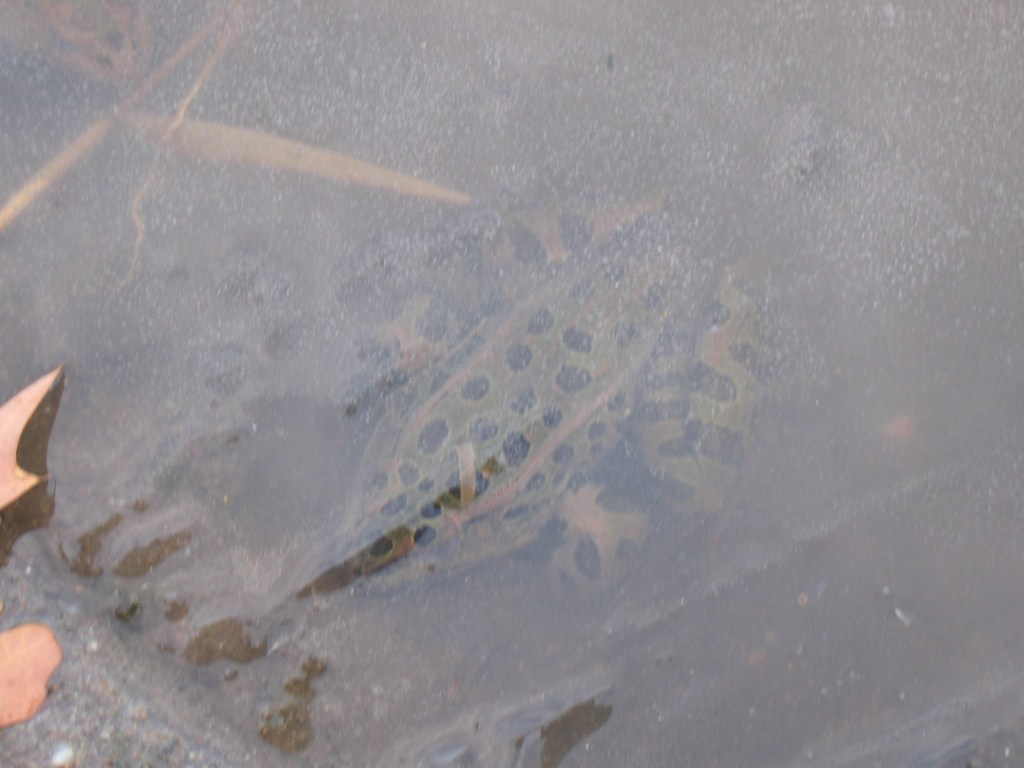
On a winter’s day years ago, I made a stunning discovery while walking through my local dog park. The pond in the middle of the park had just frozen, and the ice was still clear. Beneath the ice, I could see dozens of leopard frogs suspended, as if frozen in time by an evil witch. Were they dead? Alive? Fascinated, I knelt down to study them closer.

Crash!
My reverie was shattered when my dog galloped into frame, smashed the newly frozen ice in a reckless rampage, and then galloped off into the field again. I screamed and then looked back at the water where the frogs, now liberated from their icy prison floated for a second and then began to swim away very, very s…l…o…w…l…y.
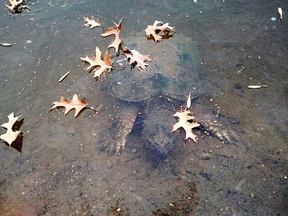
When the snow falls and lakes freeze over, Minnesota’s wildlife employ a variety of adaptations to stay alive. Leopard frogs and painted turtles hibernate (or brumate) underwater from October through April. During this time, their heart rate and metabolism slows dramatically and they breathe through their skin (or in the case of turtles, through their butts!).
Many other cold-blooded animals, including toads and salamanders, hibernate underground below the frost-line in burrows 1-2 feet deep. Snakes also hibernate underground, but with a twist. Most will seek hibernacula – basically a group burrow – where they spend the winter cuddling in comfort with dozens or sometimes even hundreds of other snakes from a variety of different species.
The science of how lakes freeze is pretty interesting as well. Water is densest and heaviest at 39°F. So, when the surface of a lake begins to cool in the fall, the water at the top will actually sink. The new “top water” will cool and sink as well, until eventually with the help of cold autumn winds, the lake “turns-over” and all of the water is evenly mixed. After that, the top layer of water will continue to cool until it freezes at 32°F. Once frozen, the ice on top of a lake acts as an insulating layer that allows the water below to remain liquid throughout the winter.

Lake turnover is a critical component in how fish survive the winter and how lakes stay healthy year-round. Turnover brings oxygen from the surface down into deeper water where fish can access it throughout the winter, and releases iron from the bottom sediment to bind with phosphorus in the water. Meanwhile, aquatic plant growth slows down, while microbes and zooplankton remain active. The end result is a “refresh” for the lake with less algae in the spring.
Though Minnesota’s plants and animals are well-adapted for cold and snow, every winter presents different challenges. Small, shallow lakes sometimes experience winter fish kills when all of the available oxygen in the water is used-up before the spring arrives. During years with ice-cover but no snow, algae are able to keep growing throughout the winter, causing algae blooms early in the spring. Chloride from winter road salt is also problematic. Because chloride is heavy, it accumulates at the bottom of lakes. As a result, lakes with high levels of chloride may not turnover in the fall and also end up with a layer of salty water where nothing can live.
If you’re lucky enough to stumble upon frozen frogs or turtles while you’re out exploring nature this winter, the best course of action is to do nothing. Take a picture, enjoy the discovery, and then leave them to continue their hibernation. On occasion, you might also find a live, wiggling mudpuppy in open water near a spring or while ice fishing. These salamanders are fully aquatic and remain active throughout the winter. Once again, take a picture and enjoy the discovery!


Angie, Wow. This is one of the most interesting articles and the photos are fascinating!! Thank you for sharing this unique cold weather observation. Those little frogs and turtles are waiting for warmer days just like I am.
LikeLiked by 1 person